


The risk governance organization of Simplo Technology is overseen by the Board of Directors as the highest management body. On August 12, 2021, the Board approved the "Risk Management Policy and Procedures" The Audit Committee evaluates the effectiveness of the company's internal control system to ensure effective implementation of internal controls and to monitor the management of existing or potential risks. The Board approves the overall risk management policies and major decisions. Through departmental management meetings, potential risks related to operational activities are identified and addressed.
-
Risk Management Policy: Risk Management Policies and Procedures(Link)
-
Scope of risk management: The risks faced by the company are divided into four categories: business, finance, environment and operation.
-
Risk Management Process:

Risk Management Framework
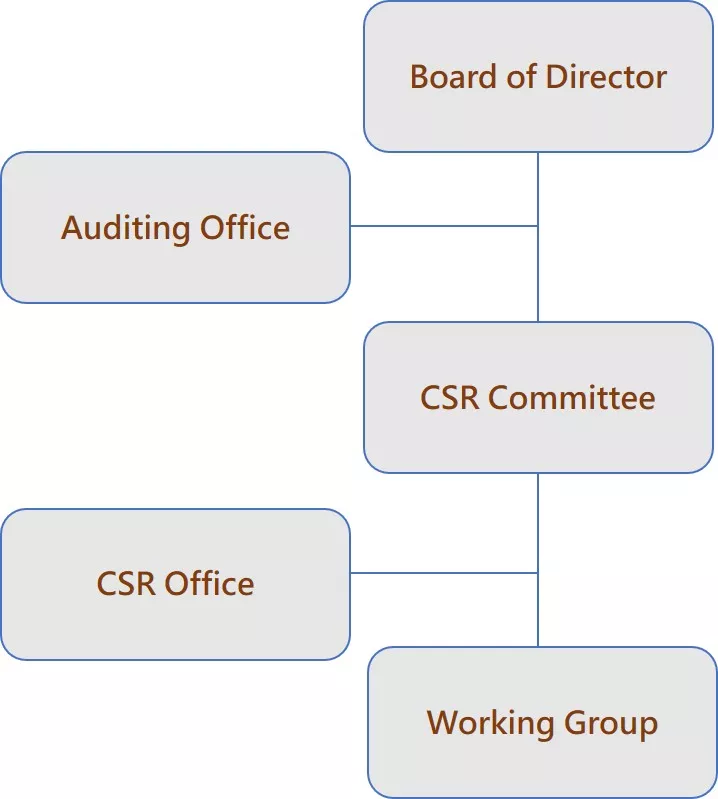
Risk Management Governance

Goals- In response to the requirements of corporate governance laws and regulations, introduce an enterprise risk management mechanism
- Refer to "ISO 31000 Risk Management -Principles and Guidelines" to perform enterprise risk analysis and assessment
- Comply with Task Force on Climate-related Financial Disclosures (TCFD) requirements (including governance, strategy, risk management, indicators and targets)
- Disclose relevant information in compliance with GRI and customer requirements
Operating Situation
The company implements the risk management mechanism and reports the operation status of risk management to the board of directors once a year. The operation status in 2022 is explained as follows.

Category Operating situation Business Scope Including corporate governance risk, reputation risk, strategic risk, operational risk, human resource risk, or the impact of changes in domestic and foreign policies and laws on the company's sustainable operation, etc. The company conducts group operation management review meetings every month to identify and deal with operational risks. Finance Scope Including financing risk, investment risk, liquidity risk, exchange rate and interest rate risk, risk of capital lending to others, endorsement guarantee risk, derivative commodity transaction risk and financial decision-making risk, etc., which have an impact on the company's finances. The financial management department regularly reports to the management to monitor risks and implement policies。 Operation Scope Including information security risks and occupational safety and health management risks.
(1) The Information Department is responsible for the planning and implementation of the cyber security related norms, the executives of the Information Department will regularly participate in the internal information security related meetings, and pay attention to the Information Security related issues regularly; in addition, the audit office is the audit unit for cyber security monitoring and conducts annual cyber security audits on the internal control system - computer cycle to evaluate the effectiveness of internal controls over the Company's information operations.
(2) Labor representatives are selected in accordance with occupational safety and health related laws and regulations, and a "Safety Committee" is convened on a quarterly basis to communicate and exchange ideas on occupational safety and health related issues, to ensure and maintain the safety and health conditions of the workplace in compliance with legal requirements, and to actively seek and implement opportunities and actions for continuous improvement. Simplo implements education and training activities such as hazard notification education and training (when new recruits arrive on duty or before job adjustment), self-defense firefighting formation (at least once every six months), emergency response drills (at least once a year) and other education and training activities in accordance with laws and regulations.Environment Scope Including climate change risks. The company has established the CSR Committee in October 2021, and holds meetings every six months to continuously implement solutions to issues such as circular economy, green innovation, social care, and honesty and integrity,. Risk Identification and Operation
To strengthen the "Risk Management Task Force" understanding of risk management, regular risk management education and training sessions are held. Trainees include members of the Sustainability Committee and department heads. The course content covers topics such as global risk trends, international risk management standards, the Financial Supervisory Commission’s Code of Conduct for Listed Companies' Risk Management, and practical corporate risk management.
After the course, a risk questionnaire survey is conducted, and response strategies are developed. The questionnaire content references international trends, customer requirements, regulations, and industry information to identify four major risk categories: "strategic," "operational," "environmental," and "hazard." These are further elaborated into 12 specific risk topics.
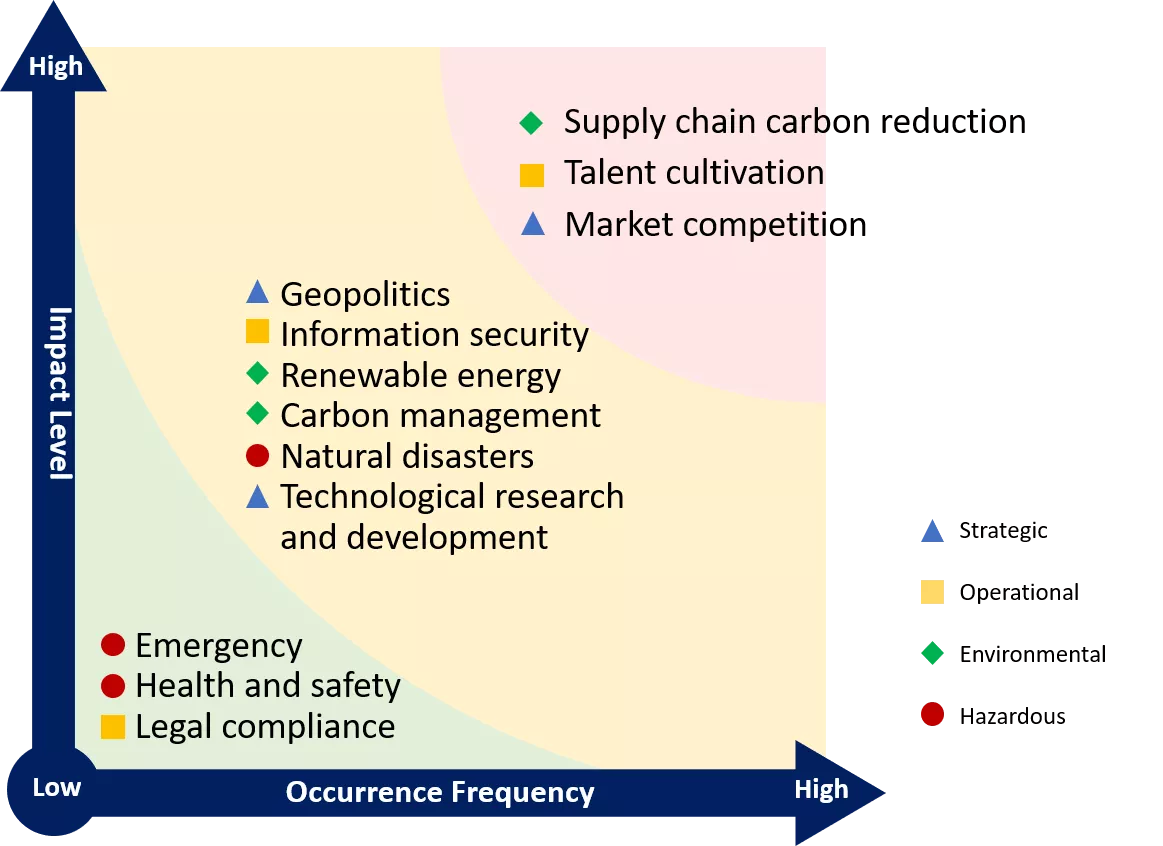 |
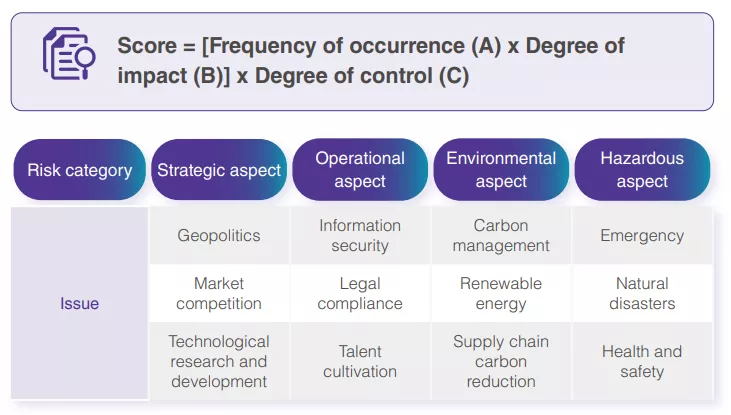
Risk Response
1. Supply chain carbon reduction (see: Supply Chain Management)
2. Talent cultivation (see: Talent cultivation)
3. Market competition (see: Company overview)